

Why Denmark Is Different: Understanding Medicine Pricing and Distribution in a Highly Digitalised Market
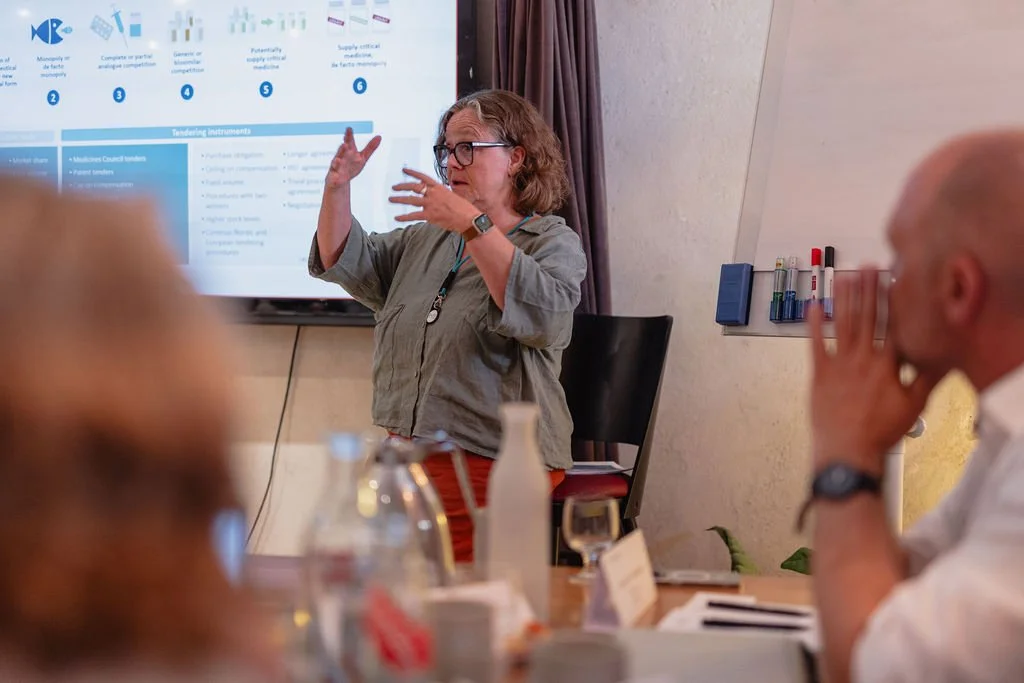
Dorthe Bartels, shared her insights on how the sales of hospital products through the advising Medicine Board is structured on the Danish market.
Planning to launch a medicinal product in Denmark? Here's what new suppliers of medicine need to know about pricing, reimbursement, distribution and procurement in the Danish pharmacy and hospital sectors.
Market access in Denmark requires more than a marketing authorisation. Although Denmark is a relatively small pharmaceutical market, its highly digitalised pricing, procurement and distribution systems make it unique.
Suppliers of medicine must navigate two distinct systems for the pharmacy and hospital sectors, each with its own rules, stakeholders and procedures. Understanding how the primary and secondary sectors operate is therefore essential for successful market access and long-term commercial success.
Pricing management and distribution in the primary and secondary markets
The two distribution channels of medicine in Denmark have separate tendering and distribution procedures, but both systems are characterised by being highly price sensitive and extremely agile.
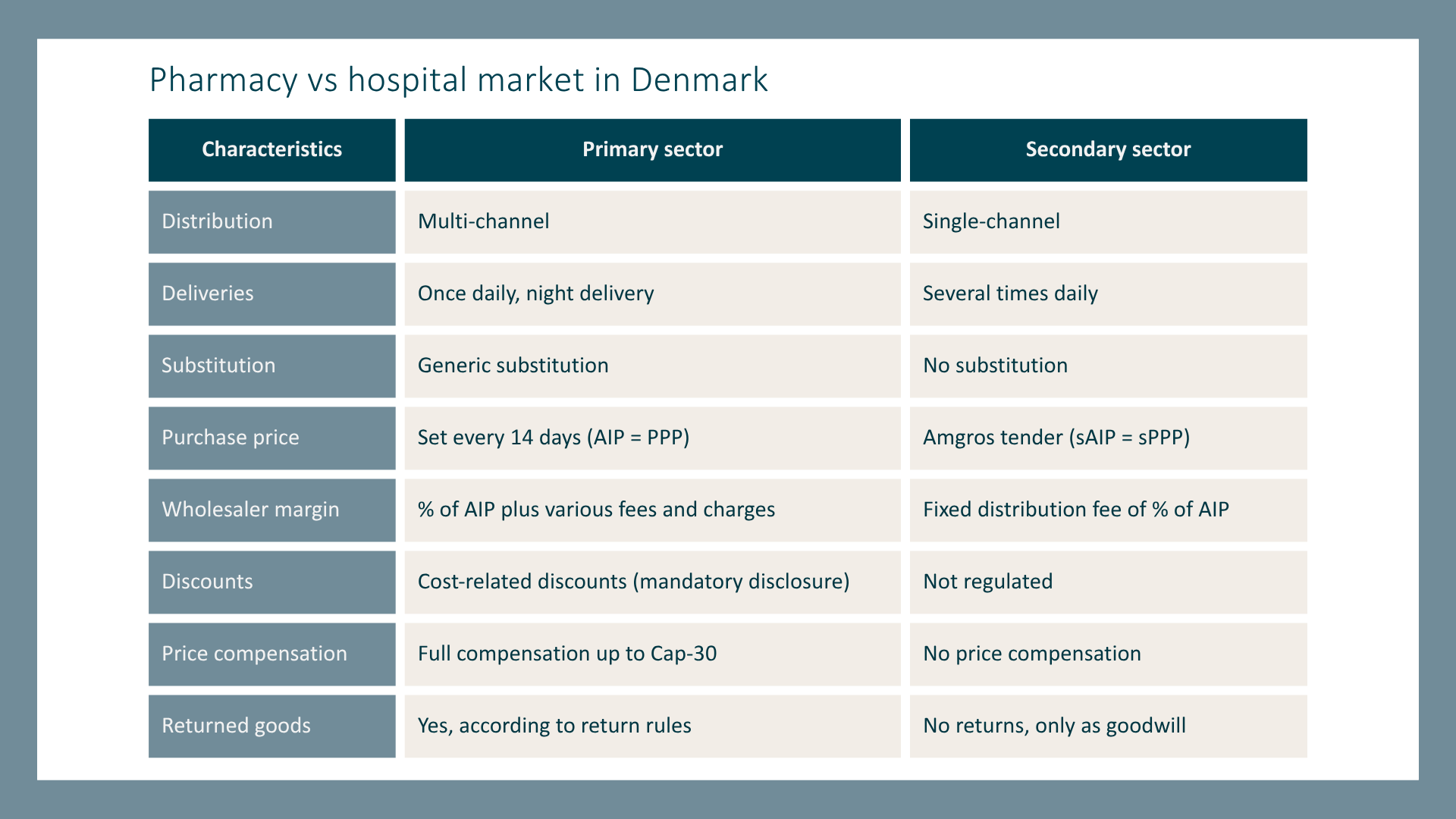
Source: Henrik Kaastrup
Digital procedures and price management in the primary sector
The primary sector market is characterised by being highly digitalised and dynamic – a big advantage for pharmacies and customers, but also an administrative challenge for suppliers due to the high frequency of tenders and price corrections.
Pricing in the primary sector is determined by biweekly tenders, and pharmacies are required to offer their customers the least expensive product for their treatment.
The Danish Medicines Agency recalculates reimbursements every two weeks based on the lowest priced product in each category. The entire pricing system updates automatically, and the wholesalers restock the pharmacies based on this information and take back any surplus higher priced stock.
To stay competitive, suppliers must monitor and update their prices every two weeks.
Distribution through two full-line wholesalers
Distribution to private pharmacies in the Danish primary sector is dominated by two full-line wholesalers, Nomeco and Tjellesen Max Jenne. This highly centralised distribution makes for a supply chain that is operationally efficient but also heavily dependent on the performance of these two logistics operators.
To strengthen competition, pharmacies are not allowed to enter into long-term contracts with wholesalers. The reality, however, is that pharmacies only rarely switch wholesaler. One reason is that pricing for prescription medicines is regulated nationally, and competition between wholesalers must rely on logistics, service, availability and reliability.
The process is highly digitalised, and the wholesalers can, to a certain extent, monitor each pharmacy’s stock directly. When a product runs low, or prices change, the wholesaler may automatically restock the pharmacy overnight without the pharmacists needing to place an order.
Assessment and tendering in the secondary sector
Joint tenders for a larger market
The public Danish hospital sector is divided into four regions. Rather than conducting tendering procedures for hospital pharmacies individually, the regions have formed Amgros, a jointly owned procurement and negotiation organization, which puts out tenders for the entire hospital market in Denmark.
Amgros are also starting to engage in joint tenders with other Nordic countries (currently Denmark, Norway and Iceland). In the future, this means suppliers ought to set prices based on a bigger market and larger competition.
The Danish Medicines Council’s process for new medicines
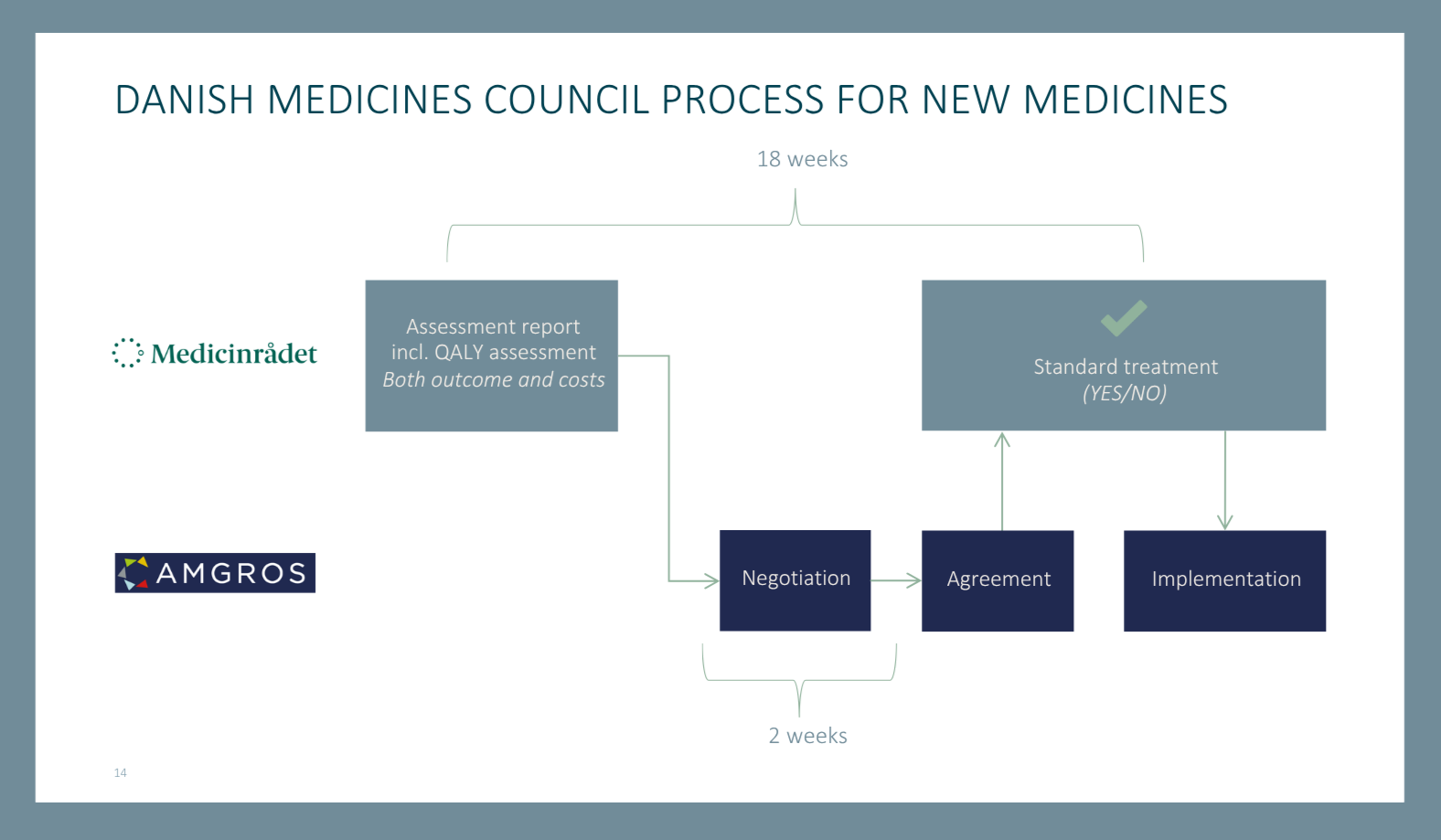
The Danish Medicines Council assesses any new treatments for the secondary sector and make recommendations to the Danish regions on standard treatments to ensure uniform health care and rapid adoption of new treatments across all regions in Denmark. During this process, Amgros negotiates the price with the supplier.
The process takes about 18 weeks from the assessment report until the new treatment is available to the hospitals.
The process
Amgros
negotiates with suppliers
conducts tendering procedures based on treatment guidelines from the Danish Medicines Council
report results to the Danish Medicines Council, which prepares the recommendation.
The Danish Medicines Council
compares the clinical value of the medicine and the costs of treatment with the medicine in their assessment
compares the different treatments and evaluates the economics
recommends standard treatments to hospitals.
Source: Amgros 2026
Biological medicines: Switching to biosimilars
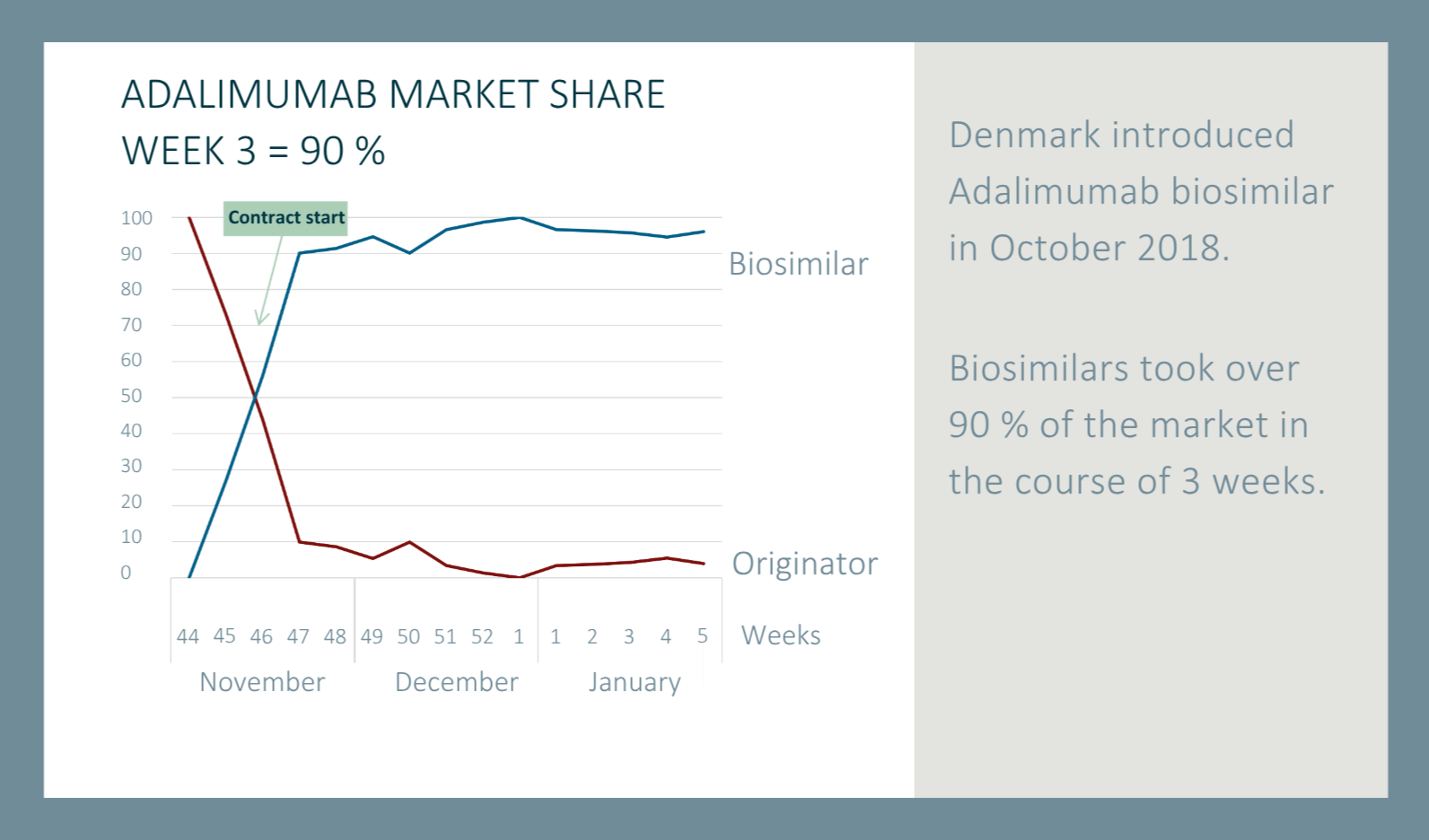
For biological medicines, the switch from the original treatment to cost-competitive biosimilars may be as short as three weeks. In some cases, this may result in a very abrupt decline in sales to the originator.
Source: Amgros 2026
Assessment criteria
The Council aims to ensure effective treatments for as many patients as possible. In other words, the price as well as substantial documentation for the effectiveness of the medicine carry the most weight when they consider new treatments. So, if you are looking to access the market with an alternative to a standard treatment, be mindful of how you price it.
While price is a high priority, it is possible to access the market with a more expensive, but ultimately more cost-effective treatment. We recommend that you enter into a dialogue with the Council through a local service provider prior to submission to ensure the correct documentation. For instance, at PharmAdvice we successfully helped a client point out their treatment’s potential for substantial time and resource savings to hospitals.
Annual tenders: don’t miss your window
Treatments for the secondary sector are put out to tender annually. Take note of the dates, because the tender rules are followed rigidly, and if you miss your window you must wait until next year.
While tenders are annual by default, they may be prolonged by up to two years.
Can I have my treatment assessed before I have a marketing authorisation?
Yes, you can apply for an assessment before you have been issued a marketing authorisation from the EMA and before you plan to put your product on the Danish market. The sooner you start the dialogue with the Danish authorities through your local service provider, the better we will be able to help you gain market access.
Local expertise is key to successful market access
When accessing the Danish market, you need someone in your corner who understands the local practice. At PharmAdvice, we have helped small and medium-sized pharma companies with market access for more than 25 years.
Fill in the form, and we will contact you to schedule a discussion of your needs.

Dorthe Bartels, Senior Strategic Advisor at Amgros.

Henrik Kaastrup, Senior Director of Public Affairs & Business Development at Nomeco.
Speakers at EuDRAcon 2026
The information in this article is based on the talks given at the annual meeting of the pan-European service provider network, EuDRAcon, in 2026.
Dorthe Bartels, Senior Strategic Advisor at Amgros, shared her insights on how the sales of hospital products through the advising Medicine Board is structured on the Danish market.
Henrik Kaastrup, Senior Director of Public Affairs & Business Development at Nomeco, provided insights into how prices on medicinal products are set and regulated in the primary medicine market.
Additional sources:
Danish Medicines Council: https://medicinraadet.dk/om-os/in-english
Amgros, https://amgros.dk/en/
Nomeco, https://nomeco.dk/en
Danish Competition Council, 2016: Competition in the distribution of medicines. https://en.kfst.dk/media/3296/141016-competition-in-the-distribution-of-medicines.pdf